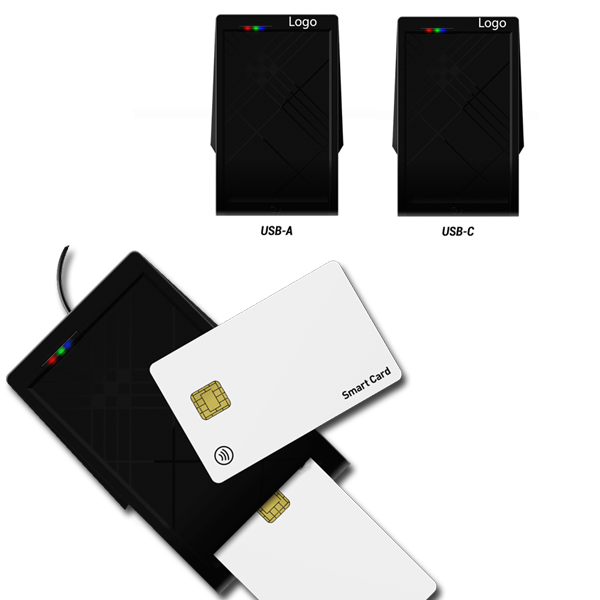
Dual Interface Card Reader for sale
Dual Interface Card Reader
- R502Dual USB-A (C9)
- R502Dual USB-C (C9)
Dual Interface Card Reader
Dual Interface Card Reader | Contact & Contactless Smart Card Reader USB
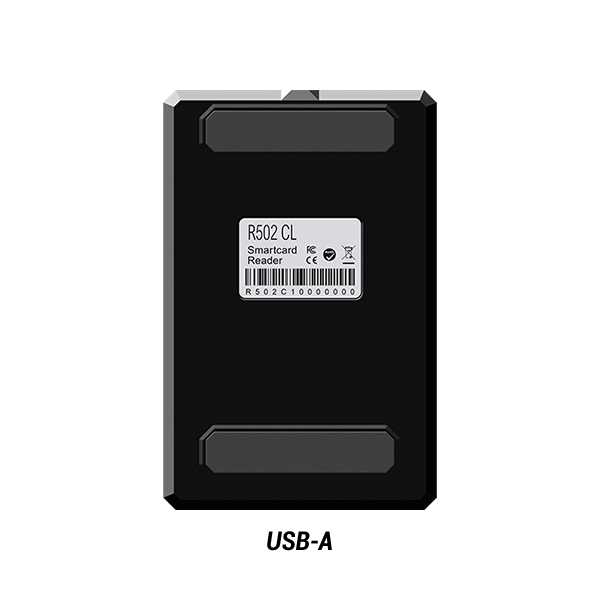
R502Dual USB-A (C9)
R502Dual USB-C (C9)
Description
Discover the Dual Smart Interface Card Reader with USB CCID support, contact (ISO 7816) and contactless (ISO 14443, MIFARE, FeliCa) compatibility, secure firmware, broad OS support (Windows, Linux, macOS, Android), and global certifications for authentication, payment, and access control.
Dual Smart Interface Card Reader — Secure, Global Smart Card Solution
The Dual Smart Interface Card Reader combines both contact and contactless smart card reading functions into a single USB device, enabling seamless integration with authentication systems, payment terminals, digital identity applications, and security-critical environments. This versatile reader supports international standards including ISO/IEC 7816, ISO/IEC 14443 Type A/B, MIFARE®, FeliCa®, and NFC, making it a preferred choice for global deployments.
Core Features
- Dual Interface: Contact & contactless card reading in one device (ISO 7816 & ISO 14443).
- USB 2.0 CCID Standard for plug-and-play compatibility.
- Wide Card Support: MIFARE®, FeliCa®, NFC, ISO 14443 A/B cards.
- Secure Hardware Design with short-circuit and over-voltage protection.
- Firmware Encryption & Upgrade Support for enhanced security.
- Status LED Indicators for power and card activity.
- Cross-Platform Support: Windows, macOS, Linux, Unix, Android OTG.
- Global Certifications: CE, FCC, RoHS, EMV Level 1, NFC Forum, Microsoft WHQL, FIPS 201.
Technical Specifications
| Specification | Value |
|---|---|
| Interface | USB 2.0 CCID (also USB 1.1 compatible) |
| Contact Card Support | ISO 7816-1/2/3 with T=0, T=1 protocols |
| Contactless Frequency | 13.56 MHz |
| Contactless Standards | ISO 14443 A & B, MIFARE®, FeliCa®, NFC |
| Power | USB 5V DC |
| Dimensions | 120 × 80 × 25.6 mm |
| Operating Temp | 0°C to 60°C |
| Storage Temp | –20°C to 85°C |
| OS Support | Windows, macOS, Linux, Unix, Android OTG |
| Certifications | CE, FCC, RoHS, EMV Level 1, NFC Forum, Microsoft WHQL, FIPS 201 |
Supported Card Technologies
- Contact Cards: CPU cards compliant with ISO/IEC 7816 standards.
- Contactless Cards: NFC, ISO/IEC 14443 A/B, MIFARE Classic, MIFARE DESFire, FeliCa.
Global Applications
The Dual Smart Interface Card Reader serves multiple industries and use cases across international markets:
- Government & eID Systems
- Banking & Payment Authentication
- Public Transport & Ticketing Systems
- Corporate Access Control
- Healthcare Card Solutions
- PKI Authentication & Digital Signatures
This reader supports critical functions in authentication, payment, and identity management systems worldwide.
Why Choose This Dual Interface Reader?
- International Standard Compliance ensures integration into global systems.
- High Security Design with encrypted firmware and hardware protections.
- Broad Platform Support including mobile via Android OTG.
- Customizable OEM Options for branding and firmware.
FAQs
What is a dual interface card reader?
A dual interface card reader reads both contact smart cards and contactless NFC cards using a single device. Q: Does this reader support Android devices?
Yes, the reader supports Android devices with OTG functionality. Specification: Host Interface: USB 2.0 CCID (also compliant with USB 1.1), USB Connector: USB-A/USB-C, Supported Card: Contact Card (ISO 7816) & Contactless Card (ISO 14443 & Mifare).
What international standards does it meet?
It complies with ISO/IEC 7816, ISO/IEC 14443, EMV Level 1, NFC Forum, and global safety certifications.
Ordering & Customization
For volume orders, OEM/ODM branding (logo, casing, packaging), or customized firmware solutions for your dual interface Smart card reader, please contact our sales team.

Buy Dual Interface Card Reader for sale.
A Dual Interface Smart Card Reader is a versatile authentication device designed to read both contact (chip-based) and contactless (NFC/RFID) smart cards using a single USB reader. It is widely deployed across banking, government, enterprise security, healthcare, and access control systems where strong authentication and compliance are required.
This all-in-one reader eliminates the need for multiple devices, reducing infrastructure costs while improving security and user convenience.